COVID – 19 Ecuador Social Distancing Isolation Part 2
March 29th is our 14th day in total isolation which is more than distancing which means not leaving your home. People 65+ cannot leave their homes at all. So if you need shopping done you need to find someone younger to shop for you. There are plenty of services offering shopping and restaurants for take-out orders and will deliver. We are lucky to have a good friend that picked up an ample supply of vegetables and fruit for us. There is also a meat delivery service that delivers outside San Miguel HOA once a week. You just order online and a good way to keep folks supplied. The curfew hours have changed from 5 am -2 pm for everyone. There are now flights from the United States arranging transport for citizens back home. I think the United States and the Ecuadorian Government have worked well to get this accomplished.
Our little town of Cotacachi does not have any confirmed cases of COVID-19 yet but that can change in the blink of an eye.
So you may wonder how we are doing in isolation? Well, day 14, and Bill and I have not been cross with each other yet. We are lucky to have a large yard that has a tall 8-foot privacy wall. We have plenty of avocados. lemons, mandarines, and fig trees which are produced in abundance. Bill’s greenhouse has plenty of jalapenos, cherry tomatoes, and onions and he just planted more green beans. I have cilantro, basil, lemongrass, sage, and thyme growing. We are doing FINE.
Somehow our days continue to be busy. Of course, we are both cooking more and trying out new recipes. I enjoy watching Michel Symon on Food Network during his special on how to cook using items in your pantry during this time. I have lots of projects that I need to complete. I just wonder how I feel once I get to the bottom of my to-do list?
Understanding the Covid-19 health emergency rules … and when will they end?
On March 16, the day Ecuador’s Covid-19 virus case count reached 58, President Lenin Moreno declared a national health emergency, or emergencia sanitaria, and imposed Latin America’s toughest social distancing rules. Since the 60-day emergency decree was issued, the number of confirmed cases in Ecuador has soared to 1,835 and will probably top 2,000 when Sunday’s numbers are reported.

Although the intent of the restrictions is clear, many of the details are not, partly because a number of them have been revised since March 16. In the last week, the curfew has been extended for the third time, travel between provinces and cantons has been restricted again and the number of days private cars are allowed on the street has been reduced. There will almost certainly be more changes in the weeks ahead.
Here are the key rules covered under the health emergency.
- Residents are under orders to stay home except to purchase food and medical supplies; to attend medical appointments; to get to work if the work is deemed essential by the government; to visit banks for essential business, such as taking out cash; and to care for the elderly or disabled. The order is in place until April 5 but the interior ministry says the date will be extended.
- Face-to-face contact is restricted as all public and private schools and universities are ordered to close; in-store restaurant service is discontinued although restaurants are allowed to offer take-out and delivery service; all non-essential businesses are closed, and all non-essential government services are closed with employees ordered to work from home if possible.
- A nationwide curfew is in effect from 2 p.m. to 5 a.m. daily. Additional curfew restrictions apply in Guayas Province and in the Galapagos.
- International and national air travel have been suspended as has interprovincial bus service. Municipal bus service has been partially and completely suspended in most urban areas. These suspensions are scheduled to end on April 5 but will likely be extended.
- Only one member per family is allowed to shop at supermarkets, mercados, and pharmacies. Those under 18 or over 65 are not allowed to shop unless there are no others in the household between those ages. There are additional restrictions in Quito where the elderly have been defined as all those over 55. Shoppers are advised to wear masks and plastic gloves, which are requirements for entry at some stores and markets.
- Restrictions on the use of private vehicles mandate that vehicles with license plates ending in 1, 2, and 3 will be allowed to circulate only on Monday and Friday; vehicles with license plates ending in 4, 5, and 6 can circulate on Tuesday and Saturday; vehicles with license plates ending in in 7, 8 and 9 can circulate on Wednesday and Sunday; and vehicles with plates ending in 0 can circulate on Monday and Thursday. Vehicles are only allowed on the streets during non-curfew hours. On permitted days, drivers must have a legitimate reason for leaving homes, such as purchasing food or medicine.
- Restrictions on highway travel allow only permitted vehicles making essential deliveries, such as food, medical supplies, and fuel, to cross provincial borders, and travel between cantons is restricted to vehicles with authorized business.
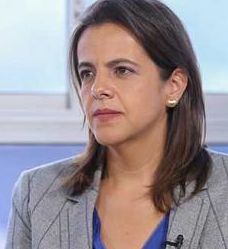
When will the rules be relaxed? According to Interior Minister María Paula Romo, it is too early to say. “We have not yet reached the peak number of virus cases and it could be weeks after we do before we can make changes,” she says. “We all want to return to a normal life but we must overcome this terrible disease or there will be no normalcy. The emergency declaration is for a term of 60 days but this will be extended if necessary.”
As evidence that Ecuador’s stay-at-home order is having the desired effect, Zevallos points to the situation in the U.S. state of Florida, where similar orders have not been imposed. “At one point last week, Ecuador and Florida had the same number of confirmed cases and today Florida has more than twice the number we have. I think our rules have made a difference.”
The new health minister worked with U.S. CDC
March 26 count 1,382 confirmed cases, with 34 deaths. Guayas has 1,000 cases, with 678 in Guayaquil. Pichincha has 121 cases. The number of cases in Imbabura remains at eight: seven in Ibarra and one in Otavalo.